
Latest free 80+ MCQs of Salat in Islam – Islamic Studies
1. The word Salat is the Arabic name for:
Correct Answer: C. Prayer
Explanation: “Salat” is the Arabic term for the Islamic ritual prayer, one of the Five Pillars of Islam.
2. The literal meaning of the word Salat is:
Correct Answer: C. To Pray or Bless
Explanation: The literal Arabic meaning of “Salat” is “to pray” or “to bless,” signifying both worship and divine blessing.
3. Salat (Nimaz) is the second Pillar of:
Correct Answer: C. Islam
Explanation: Salat is the second of the Five Pillars of Islam, preceded only by the Shahada (declaration of faith).
4. To call for Salat is known as:
Correct Answer: A. Azan
Explanation: Azan is the Islamic call to prayer, announced to summon Muslims to perform Salat.
5. First Azan was called in:
Correct Answer: C. 1 A.H
Explanation: The first Azan in Islam was called in 1 A.H., after the migration of the Prophet (PBUH) to Madinah.
6. Who proposed Azan for the first time?
Correct Answer: B. Hazrat Umar (RA)
Explanation: Hazrat Umar (RA) was the first to propose the idea of Azan as a call to prayer, after which Hazrat Bilal (RA) was appointed as the first Muazzin.
7. The one who delivers Azan is known as:
Correct Answer: B. Moazzin
Explanation: The person who delivers the Azan (call to prayer) is called a Moazzin (Mu’adhdhin).
8. How many prayers have no Azan?
Correct Answer: C. Two (Eid & Janaza Namaz)
Explanation: Two prayers — Eid Namaz and Janaza (Funeral) Namaz — are performed without an Azan.
9. The act of Salat must be preceded with:
Correct Answer: A. Ablution
Explanation: Salat must be preceded by Ablution (Wuzu/Wadu), which is the ritual purification required before prayer.
10. Ablution (Wazu) made obligatory in:
Correct Answer: C. 5th A.H
Explanation: Ablution (Wazu) was made obligatory in the 5th year after Hijrah.
11. How many Sunnahs are in four obligations of Ablution?
Correct Answer: C. 13
Explanation: There are 13 Sunnah acts associated with the four obligatory (Farz) acts of Ablution.
12. There are Four Types of Namaz:
Correct Answer: C. Farz, Wajib, Sunnah, Nafil
Explanation: The four types of Namaz in Islam are Farz (obligatory), Wajib (necessary), Sunnah (prophetic tradition), and Nafil (voluntary).
13. How many times the word Salat “Nimaz” is mentioned in the Quran?
Correct Answer: C. 82 Times
Explanation: The word Salat (Nimaz) is mentioned approximately 82 times in the Holy Quran.
14. How many times Salat is commanded in the Quran?
Correct Answer: C. 700 Times
Explanation: Salat is directly or indirectly commanded approximately 700 times throughout the Quran.
15. On which occasion was Namaz gifted to the Holy Prophet (PBUH)?
Correct Answer: B. Miraj
Explanation: The five daily prayers (Namaz) were gifted to the Holy Prophet (PBUH) on the occasion of Miraj (the Night Journey and Ascension).
16. On Judgment Day the first question will be about:
Correct Answer: B. Namaz
Explanation: According to Hadith, the first thing a person will be asked about on the Day of Judgment is their Namaz (prayer).
17. The part of prayer the Holy Prophet did is called:
Correct Answer: B. Sunnat
Explanation: The parts of prayer that the Holy Prophet (PBUH) regularly performed are called Sunnah prayers.
18. Muslims must face in the direction of:
Correct Answer: C. Khana-e-Kaaba
Explanation: Muslims must face the direction of Khana-e-Kaaba in Makkah (known as the Qibla) while performing Salat.
19. How many Takbeers are recited by Moazzin in Azan?
Correct Answer: C. 6
Explanation: The Moazzin recites “Allahu Akbar” (Takbeer) 6 times in the Azan — four at the beginning and two near the end (in most schools of thought).
20. The first type of prayer in Islam is known as:
Correct Answer: A. Farz Prayers
Explanation: Farz (obligatory) prayers are the first and most important type of prayer in Islam, which every Muslim must perform.
21. The first Salat is known as:
Correct Answer: A. Fajr
Explanation: Fajr is the first of the five daily obligatory prayers, offered before sunrise.
22. Fajr is offered before:
Correct Answer: B. Sunrise
Explanation: Fajr prayer is offered before sunrise, beginning from the break of dawn (Subh Sadiq).
23. The 2nd Salat is known as:
Correct Answer: B. Zuhr
Explanation: Zuhr is the second of the five daily prayers, offered at midday after the sun passes its zenith.
24. Zuhr is offered in:
Correct Answer: B. Midday
Explanation: Zuhr prayer is offered at midday, after the sun has crossed its highest point and started to decline.
25. The 3rd Salat is known as:
Correct Answer: B. Asar
Explanation: Asar is the third of the five daily prayers, offered in the late afternoon.
26. Asar is offered between:
Correct Answer: B. Zuhr and Sunset
Explanation: Asar prayer is offered in the afternoon, between the time of Zuhr and sunset.
27. The 4th Salat is known as:
Correct Answer: C. Isha
Explanation: Isha is the fourth of the five daily prayers, offered at night after Maghrib.
28. Maghrib is offered at:
Correct Answer: B. Sunset
Explanation: Maghrib prayer is offered immediately after sunset, marking the end of the day’s fast during Ramadan.
29. The 5th Salat is known as:
Correct Answer: C. Isha
Explanation: Isha is the fifth and final daily obligatory prayer, offered at night after the disappearance of twilight.
30. Isha is offered between:
Correct Answer: B. Maghrib and Midnight
Explanation: Isha prayer is offered between Maghrib and midnight, though it can be performed until the break of dawn.
31. How many total Rakats in Farz prayers?
Correct Answer: C. 17
Explanation: The total Farz Rakats in the five daily prayers are 17: Fajr (2) + Zuhr (4) + Asar (4) + Maghrib (3) + Isha (4) = 17.
32. How many total Rakats in Isha prayers?
Correct Answer: B. 17
Explanation: The total Rakats in Isha prayer are 17: 4 Sunnah + 4 Farz + 2 Sunnah + 2 Nafl + 3 Witr + 2 Nafl.
33. How many total Rakats in Jumma prayer with Zuhr?
Correct Answer: B. 14
Explanation: Jumma prayer with Zuhr totals 14 Rakats: 4 Sunnah + 2 Farz (Jumma) + 4 Sunnah + 2 Sunnah + 2 Nafl.
34. The second type of prayers in Islam is:
Correct Answer: B. Wajib
Explanation: Wajib (necessary) prayers are the second type in Islam — they are obligatory but slightly below Farz in rank.
35. Wajib prayers consist of:
Correct Answer: B. Eid and Witr
Explanation: The Wajib prayers include Eid Namaz and Witr Namaz — both of which are necessary (obligatory) acts of worship.
36. Witr Namaz consists of how many rakats?
Correct Answer: B. 3 Rakats
Explanation: Witr Namaz consists of 3 Rakats and is performed after Isha prayer.
37. Eid Namaz consists of:
Correct Answer: A. 2 Rakats and 6 Additional Takbirs
Explanation: Eid Namaz consists of 2 Rakats with 6 additional Takbirs — 3 extra Takbirs in the first Rakat and 3 in the second.
38. The third type of prayers in Islam is:
Correct Answer: C. Sunnah
Explanation: Sunnah prayers are the third type in Islam — they are the prayers performed by the Holy Prophet (PBUH) regularly.
39. Two, Four, Eight or Twelve Rakats offered late at night is called:
Correct Answer: B. Tahajjud
Explanation: Tahajjud is the voluntary night prayer offered after sleeping, consisting of 2, 4, 8, or 12 Rakats.
40. Namaz e Taraweeh is offered between:
Correct Answer: B. Isha and Fajr
Explanation: Namaz e Taraweeh is offered after Isha prayer and before Fajr, exclusively during the month of Ramadan.
Salat in Islam, also known as prayer or Namaz, is the second pillar of Islam and obligatory for every Muslim. It holds immense significance in the Islamic faith. Even during the nascent stage of Islam, before the public proclamation of the message, Muslims were commanded to establish Salat. Despite the severe persecution faced in Makkah, believers were instructed to observe their prayers diligently. Following Tawhid (The absolute belief in the Oneness of Allah) Salat occupies second fundamental position among the pillars of Islam.
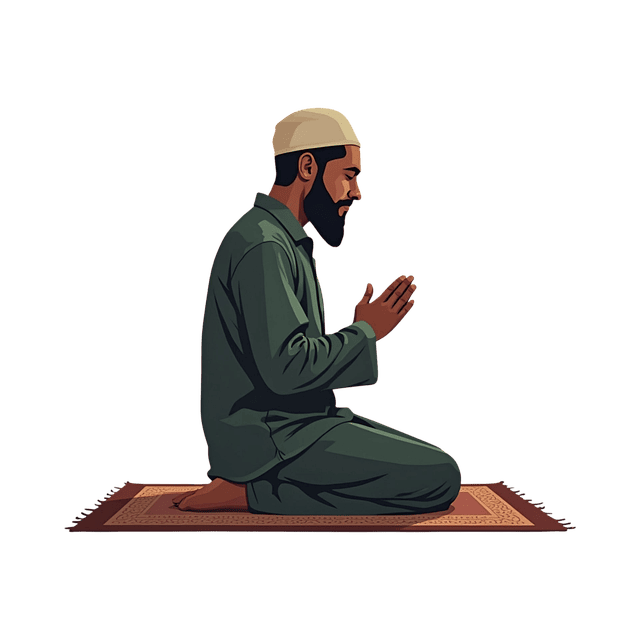
The accountability for Salat begins immediately after death, and negligence in its performance will not be excused. It is mandated under all circumstances: if one cannot pray while standing, they must pray while sitting; if sitting becomes impossible, then praying while lying down is prescribed. As mentioned in hadith
The Prophet Muhammad (ﷺ) said:
“Pray standing; if you cannot, then sitting; and if you cannot, then lying on your side.”
— (Sahih al-Bukhari, Hadith 1117)
This unwavering obligation underscores Salat’s unparalleled importance. Given its critical role, Salat frequently features in competitive examinations conducted by FPSC, PPSC, KPPSC, SPSC, BPSC, and other commissions. To assist aspirants in preparing efficiently, we have curated a comprehensive and meticulously organized collection of MCQs on this essential topic.
As the Prophet Muhammad (ﷺ) said: “The first matter that the slave will be brought to account for on the Day of Judgment is the Salat. If it is sound, then the rest of his deeds will be sound, and if it is bad, then the rest of his deeds will be bad.”
(Reference: Sunan al-Tirmidhi 413, Grade: Sahih)